























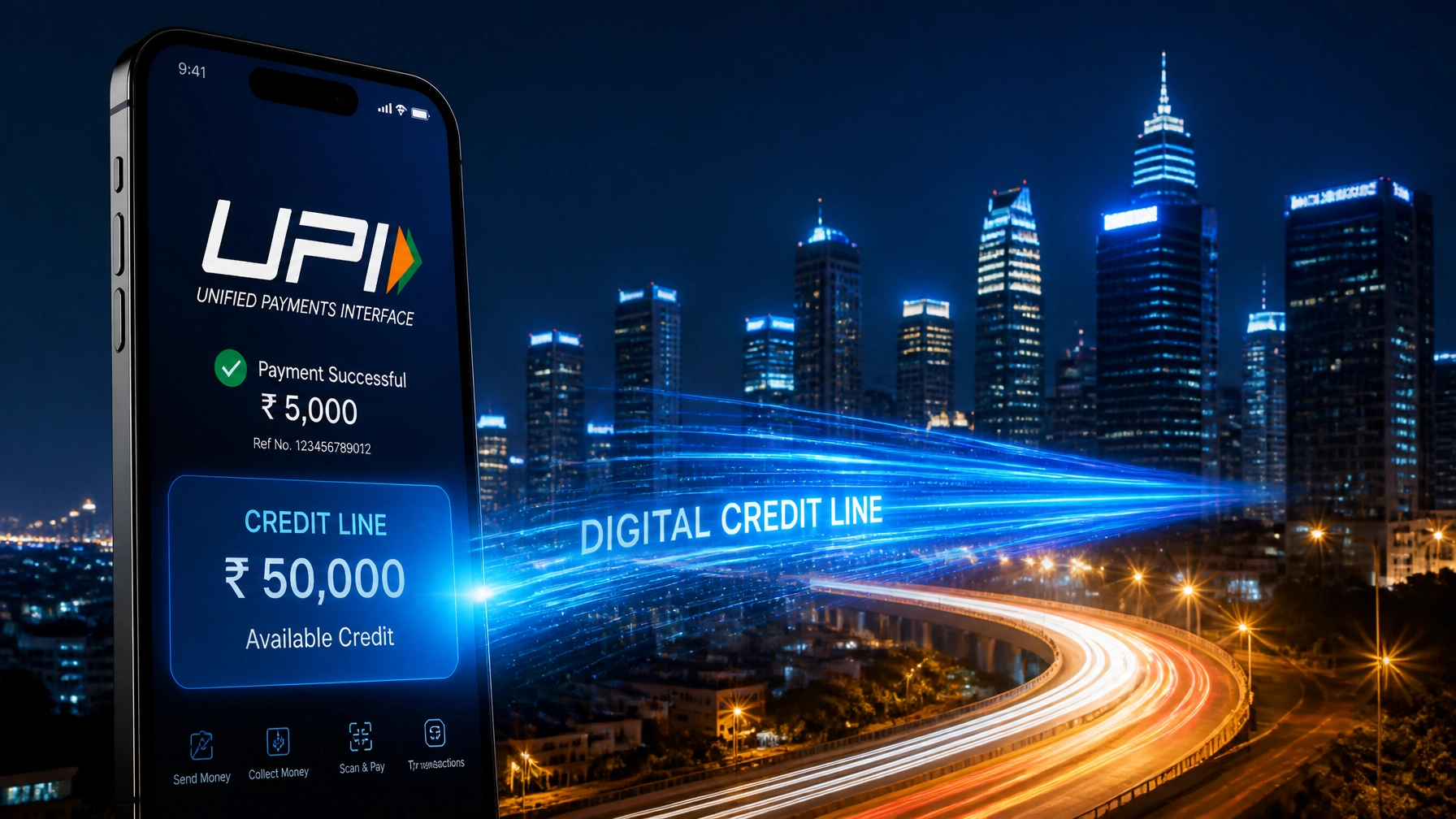

The landscape of Fintech News India has shifted dramatically in recent years, but 2026 marks a watershed moment for the nation’s micro, small, and medium enterprises (MSMEs). For a decade, the Unified Payments Interface (UPI) has been the undisputed king of peer-to-peer (P2P) and peer-to-merchant (P2M) transactions. However, the next frontier is no longer just about moving money: it is about accessing it.
The introduction and rapid scaling of Credit on UPI are poised to dismantle the traditional barriers that have kept millions of small business owners in the shadows of the formal financial system. As we analyze the trajectory of the economy of india, it becomes clear that credit-integrated payment rails are not merely a convenience; they are a transformative solution designed to revitalize the backbone of the nation's industry.
1. The Democratization of Working Capital
For decades, the primary hurdle for Indian MSMEs has been the "collateral crunch." Traditional banking institutions often require physical assets: land, gold, or machinery: to secure even the smallest working capital loans. This has resulted in a staggering ₹30 trillion credit gap.
Credit on UPI serves as a catalyst for change by shifting the focus from collateral to cash flow. By linking pre-sanctioned credit lines directly to a user’s UPI handle, the National Payments Corporation of India (NPCI) has created a system where credit is as liquid as cash. Small businesses can now draw from a revolving line of credit to pay suppliers or restock inventory instantly at any QR-code-enabled merchant.
This shift is a recurring theme in Startup News India, where fintech disruptors are building specialized underwriting engines that analyze transaction velocity rather than fixed assets. You can see more about how these shifts are impacting the broader market on our latest stories page.

2. Real-Time Data: The Fuel for Modern Underwriting
One of the most significant developments in Fintech News India is the evolution of data-driven insights. In the past, a kirana store owner might have a thriving business but a "thin file" at the credit bureau. With the explosion of UPI transactions, that same merchant now generates a rich, real-time digital footprint.
Lenders are now utilizing "electronic communications network" data and UPI transaction histories to build sophisticated risk profiles. These profiles account for:
- Seasonality: Identifying when a business needs more capital (e.g., festive seasons).
- Ticket Size: Understanding the average transaction value to assess business scale.
- Repayment Behavior: Tracking the frequency and consistency of merchant payouts.
This granular level of detail allows for "legitimate purpose" lending where capital is deployed precisely when and where it is needed, reducing the risk of over-leveraging while ensuring exponential growth for the borrower.
3. RBI’s 2026 Pivot to Cash-Flow–Based Norms
The regulatory environment has been a significant driver in this transformation. As of April 2026, the Reserve Bank of India (RBI) has officially implemented reforms that prioritize cash-flow–based assessment over traditional security-based models for MSME lending. This policy shift is essential for the long-term health of the economy of india.
By updating the Master Directions on MSME lending, the RBI has provided a clear legal framework for banks and NBFCs to integrate credit lines into the UPI ecosystem. This ensures that the expansion of credit remains sustainable and secure. For those looking to understand the technical and legalistic terminology of these changes, our economics section offers deep dives into the latest regulatory updates.

4. Operational Efficiency and Lower Acquisition Costs
From a lender's perspective, the traditional cost of acquiring and servicing a small-ticket loan (e.g., ₹50,000) was often prohibitively high. The administrative burden of manual KYC, physical site visits, and paper documentation made small loans unprofitable.
Credit on UPI changes the economics of lending. By leveraging the digital-first nature of UPI, fintechs and banks can:
- Automate Onboarding: Utilizing Aadhaar-based e-KYC and Account Aggregator (AA) data.
- Reduce Friction: Disbursals happen in seconds, directly into the merchant's linked account.
- Streamline Collections: Automated repayments can be scheduled or deducted from daily UPI settlements.
This "digital-to-the-core" approach is frequently highlighted in Startup News India as the reason why new-age NBFCs are outperforming traditional lenders in the micro-loan segment. For entrepreneurs looking to navigate this landscape, check out our startup networking guides.
5. Strengthening the Economy of India through MSME Growth
The MSME sector contributes roughly 30% to India's GDP and 45% to its exports. When these businesses are revitalized through easy access to credit, the ripple effects are felt across the entire economy of india. Increased liquidity at the grassroots level leads to higher employment, increased consumption, and improved tax revenues.
According to recent reports from the NPCI, the "pay-by-credit" feature on UPI is expected to increase digital transaction volumes by an additional 20% by the end of 2026. This isn't just about moving numbers on a screen; it's about providing the "value proposition" of financial stability to the millions of entrepreneurs who power our nation.
6. Navigating the Risks: Over-leveraging and Fraud
While the outlook is overwhelmingly optimistic, the rapid expansion of credit on UPI is not without its challenges. The ease of access can lead to impulsive borrowing, potentially trapping micro-merchants in debt cycles.
Furthermore, as the network grows, so does the sophistication of cyber threats. Industry leaders in Fintech News India are increasingly focusing on:
- AI-Driven Fraud Detection: Identifying suspicious transaction patterns in real-time.
- Consumer Education: Ensuring MSME owners understand the terms of their revolving credit lines.
- Transparent Pricing: Using "data-driven insights" to offer fair interest rates rather than predatory ones.
Protecting the integrity of the UPI rail is paramount. At Business Tantra, we cover these security developments extensively in our video news section.

7. The Future: A Unified Financial Identity
As we look toward 2027 and beyond, Credit on UPI is paving the way for a "Unified Financial Identity." Instead of fragmented bank statements and credit scores, a business owner’s UPI handle will serve as a comprehensive resume of their financial health.
This democratized access to capital will allow a small-town weaver or a roadside eatery owner to compete on a level playing field with much larger corporations. The "mission" of the Indian fintech ecosystem has always been inclusion; Credit on UPI is the ultimate tool to realize that vision.

Conclusion
The integration of credit into the UPI framework represents a definitive shift in the Indian financial paradigm. It is a catalyst for change that addresses the systemic inefficiencies of traditional MSME lending while leveraging the world-class digital infrastructure of the economy of india.
For stakeholders in Fintech News India, the message is clear: the era of collateral-based lending is giving way to a more agile, data-driven, and inclusive future. For the MSMEs featured in Startup News India, this is the moment to embrace digital transformation, not just for payments, but as a strategic lever for sustainable growth.
The gap is narrowing, the tools are ready, and the potential is exponential. At Business Tantra, we will continue to monitor these developments, providing you with the authoritative analysis you need to thrive in this revitalized landscape.