


























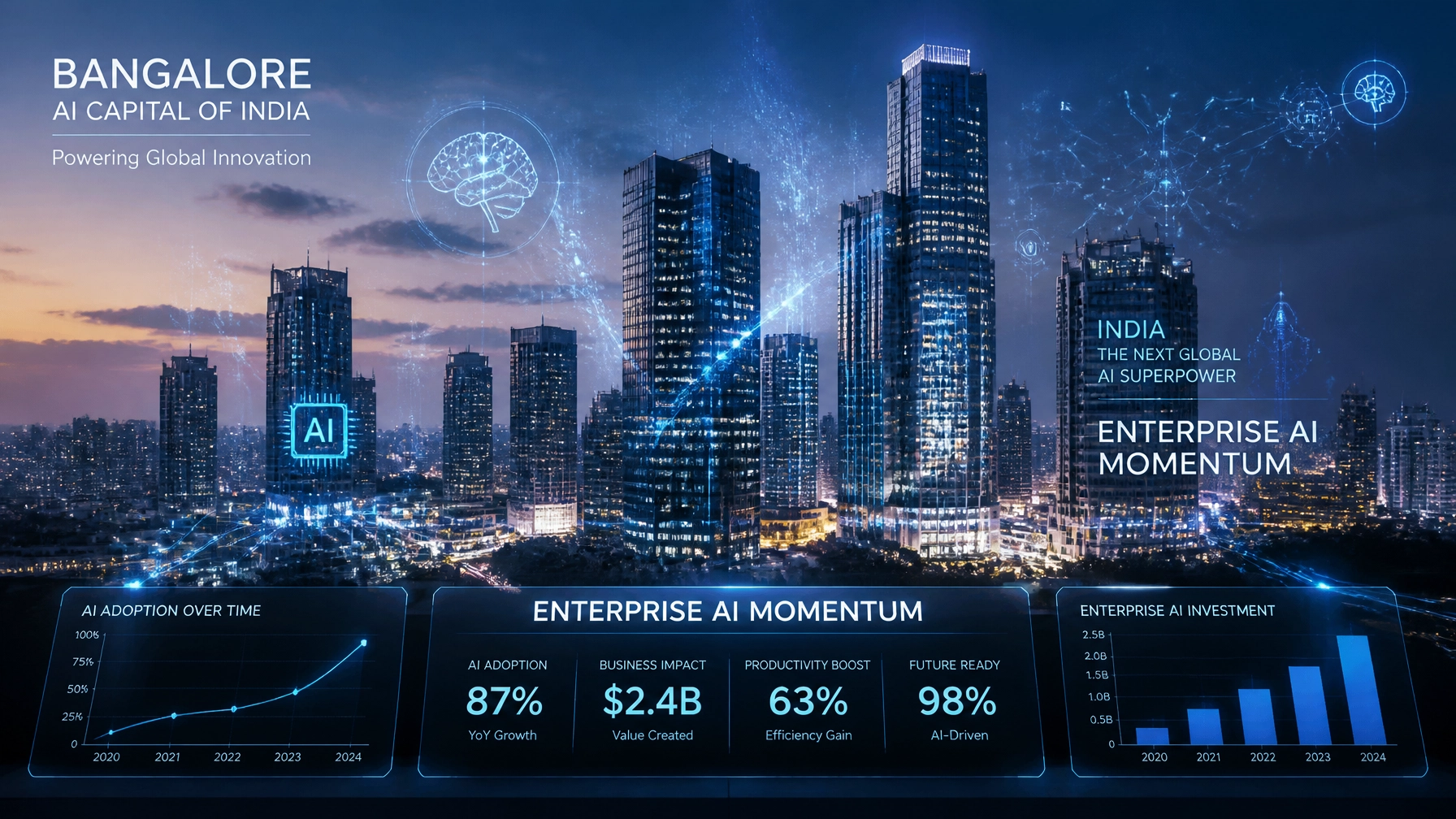

The global landscape of technology is undergoing a seismic shift, and at the epicenter of this transformation is India’s Enterprise AI Push. Once regarded primarily as the world's back-office, the Indian corporate sector has revitalized its identity, transitioning into a formidable frontline for artificial intelligence (AI) adoption and innovation. As of 2026, the momentum within the Indian subcontinent is not merely keeping pace with global trends; in many critical metrics, it is setting a new benchmark for the rest of the world to follow.
1. The Catalyst: Understanding India’s Enterprise AI Push
The current surge in AI integration across Indian businesses is not an overnight phenomenon but a result of sustained strategic realignment. According to recent reports from IBM, nearly 59% of large-scale Indian enterprises have actively deployed AI within their operational frameworks. This figure represents the highest adoption rate among all countries surveyed, signaling a profound commitment to data-driven insights and digital transformation.
This India’s Enterprise AI Push is driven by several synergistic factors:
- Accessibility of Tools: The availability of high-level AI frameworks has democratized access, allowing firms to bypass traditional development hurdles.
- Operational Efficiency: Enterprises are leveraging AI to automate repetitive tasks, thereby reducing overhead and enhancing precision.
- Off-the-Shelf Integration: The ubiquity of AI-embedded business applications has simplified the "entry-to-impact" timeline for many organizations.

2. Scaling the Future: India’s Enterprise AI Push in Global Rankings
While absolute expenditure on AI in India remains a fraction of the global total: approximately 1.5% as per NASSCOM: the rate of growth is nothing short of extraordinary. The Indian AI market is projected to witness a Compound Annual Growth Rate (CAGR) of 25–35% through 2027. This exponential growth is a clear indicator that Indian business leaders view AI not as a peripheral tool, but as a core value proposition.
By adopting a pragmatic approach, Indian firms are focusing on high-impact use cases such as customer self-service, financial forecasting, and risk management. This strategy ensures that the "mission" of AI implementation leads to immediate, tangible returns, rather than getting lost in the "pilot purgatory" that often plagues Western enterprises.
3. The Semiconductor Backbone: Tata Electronics & ASML Pact
A critical component of sustaining this momentum is the underlying hardware. The recent strategic pact between Tata Electronics and ASML marks a pivotal moment in India’s chip ambitions. Semiconductor sovereignty is the bedrock upon which India’s Enterprise AI Push is built. By securing advanced lithography capabilities, India is positioning itself as a resilient player in the global electronic communications network.

This partnership acts as a catalyst for change, ensuring that the local ecosystem has the computational power required to process massive datasets for generative AI and machine learning models. For a deeper look at how the semiconductor landscape influences local markets, explore our analysis on semiconductor geopolitics and the Indian trading ecosystem.
4. Strategic Reskilling and the Talent Paradox
Despite the aggressive adoption rates, the industry faces a significant challenge: the skills gap. Approximately 30% of Indian enterprises cite the lack of specialized expertise as a primary barrier to scaling AI solutions. However, the response has been proactive. Over 46% of Indian firms are already engaged in massive reskilling programs to prepare their workforce for the AI-centric future.
The goal is to move from a state of "Enthusiast" to "Pathfinder." This transition requires a workforce that can bridge the gap between abstract algorithmic concepts and concrete business applications. As discussed in our guide on why business management for startups is essential for growth, the integration of technology and leadership is the true driver of long-term scalability.

5. Democratize and Distribute: The Role of Startups
The India’s Enterprise AI Push is further bolstered by a vibrant startup ecosystem. Platforms like T-Hub are instrumental in turning visionary ideas into market-ready products. These startups are often the first to experiment with "physical AI": the integration of AI into robotics, logistics, and manufacturing: where the Asia-Pacific region is currently leading.
The government’s supportive stance, often referred to as the Modi Wave in startups, has created a fertile ground for innovation. By providing the necessary regulatory clarity and infrastructure, the state has ensured that AI development serves a legitimate purpose, benefiting society at large while driving economic prosperity.
6. Ethics, Governance, and Data Sovereignty
As AI becomes more deeply embedded in the social fabric, the conversation around ethical AI policies has gained urgency. While the adoption rate is high, formal governance frameworks are still maturing. Indian enterprises are increasingly recognizing that transparency and explainability are not just legal requirements but essential for maintaining consumer trust.
Key focus areas for 2026 include:
- Data Provenance: Tracking the origins of training data to ensure ethical sourcing.
- Bias Mitigation: Implementing algorithms that actively reduce discriminatory outcomes.
- Explainability: Ensuring that AI decisions can be interpreted and justified by human operators.

7. Global Synergies and the 2026 Outlook
By the end of 2026, India is poised to be more than just a regional frontrunner; it will likely be a global node for AI-driven service exports. The synergy between large-cap enterprises and agile startups, supported by a strengthening semiconductor foundation, creates a unique "AI triad" that is difficult to replicate elsewhere.
For investors and professionals, understanding this momentum is crucial. The trajectory of the Indian economy is now inextricably linked to its digital prowess. As we have seen in previous cycles, such as the 2021 economic rebound, those who align their strategies with these transformative trends are best positioned for success.
Conclusion
In summary, India’s Enterprise AI Push is a multifaceted phenomenon that encompasses strategic partnerships, aggressive adoption, and a massive investment in human capital. By aligning local ingenuity with global standards, Indian enterprises are not just participating in the AI revolution; they are actively steering its direction. The transition from cost-centric automation to value-heavy innovation is well underway, signaling a new era of global technological leadership for India.