



























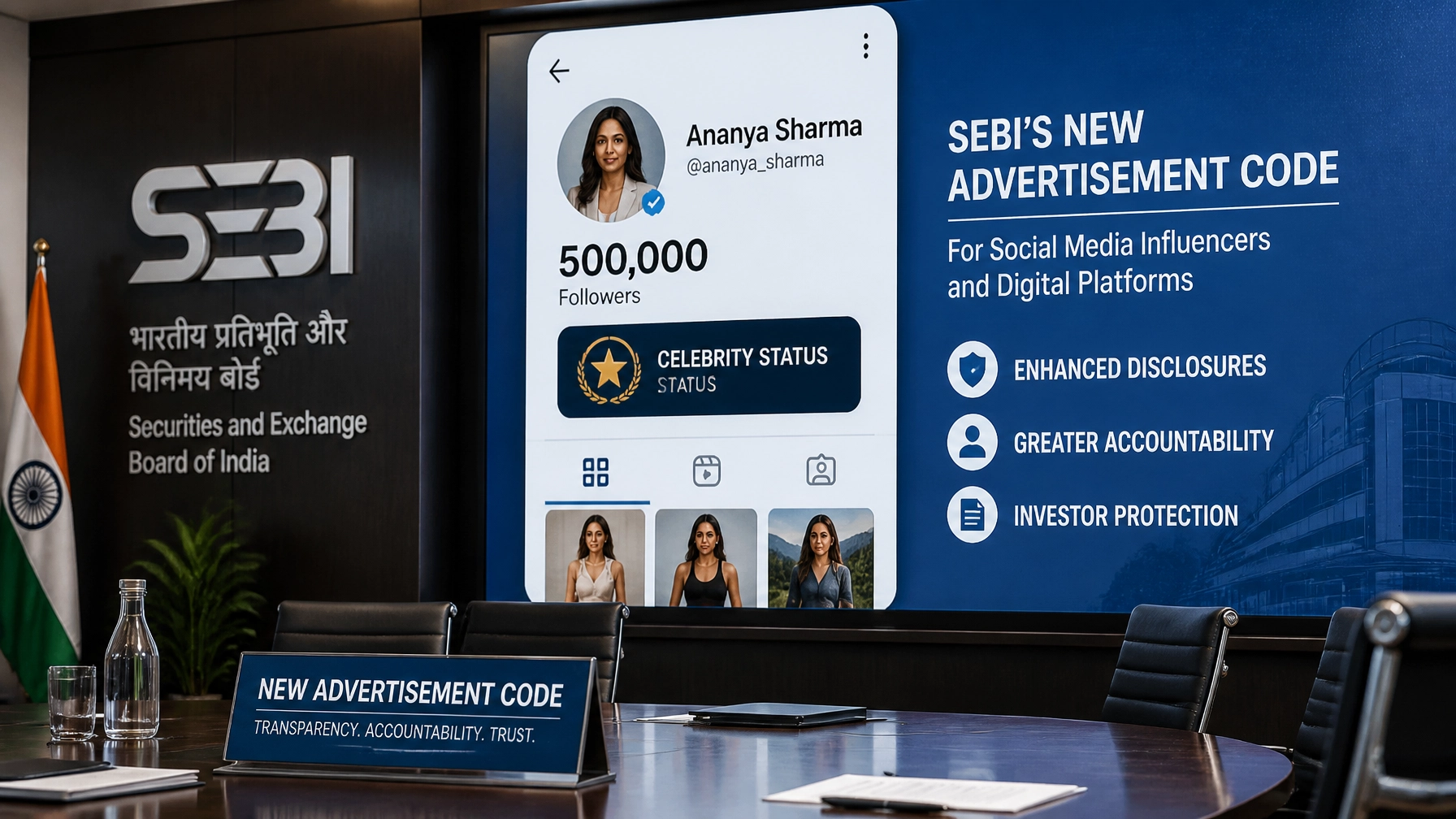

In a move that signals a tectonic shift in the landscape of fintech news India, the Securities and Exchange Board of India (SEBI) released a transformative draft for the Common Advertisement Code (CAC) on June 23, 2026. This regulatory framework aims to harmonize the disparate advertising standards currently governing various financial intermediaries, bringing much-needed clarity: and significant constraints: to the world of financial influencer marketing. The most striking provision of the draft code is the formal classification of social media influencers with more than 5 lakh (500,000) followers on a single platform as "celebrities."
This reclassification is not merely a change in nomenclature; it triggers a rigorous set of compliance requirements that could fundamentally alter how startups and established financial institutions engage with "finfluencers." By bridging the gap between traditional brand ambassadors and digital content creators, SEBI is seeking to democratize investor protection while ensuring that the "mission" of financial literacy is not compromised by misleading or high-octane promotional tactics.
1. The 500,000 Threshold: When an Influencer Becomes a Celebrity
The draft CAC introduces an objective, data-driven metric to define influence in the digital age. Under the proposed rules, any individual commanding a following of 5 lakh or more on any single social media platform: be it Instagram, YouTube, X, or LinkedIn: is now legally a "celebrity" in the eyes of the market regulator. This move follows a broader industry trend toward recognizing the massive reach and persuasive power of digital creators, positioning them alongside traditional icons like sportspersons, lead actors, and reality show contestants.
For many creators in the startup news India sphere, this threshold marks a "catalyst for change" in their business models. Previously, influencers operated in a relatively gray area of regulation, often governed by the self-regulatory guidelines of the Advertising Standards Council of India (ASCI). By formalizing this definition, SEBI is establishing a "legitimate purpose" for closer scrutiny, ensuring that those with the power to move markets are held to the same standards of accountability as the celebrities of yesteryear.

2. Restricting the Scope: Brand vs. Product Endorsements
One of the most significant hurdles introduced by the draft code is the prohibition of specific product endorsements by these newly minted celebrities. The SEBI CAC explicitly states that celebrity endorsements are permitted only at the brand or entity level. A celebrity may promote a brokerage firm, a mutual fund house, or a wealthtech platform as a whole, but they are strictly forbidden from endorsing specific financial products, schemes, or investment strategies.
This distinction is crucial for investor protection. While a celebrity can lend their credibility to the reliability and service quality of a "Specified Regulated Entity" (SRE), the regulator believes that endorsing a specific investment product carries a "material risk" of influencing investors based on star power rather than financial merit. For fintech companies, this means a total "revitalization" of their marketing strategies, shifting the focus from high-conversion product pushes to long-term brand equity building.
3. Virtual Influence: Regulating the AI Avatar Frontier
In a forward-looking move that addresses the rise of generative AI, SEBI's draft code extends its reach to virtual entities. The definition of a celebrity now includes AI-generated avatars or virtual characters that possess human-like influence and a substantial following. As startups increasingly experiment with digital humans to lower production costs and maintain 24/7 engagement, SEBI is ensuring that these "digital facades" do not become a loophole for circumventing ad standards.
Whether it is a hyper-realistic AI financial advisor or a stylized virtual personality, if the entity crosses the 5 lakh follower mark, it falls under the celebrity regulatory umbrella. This inclusion of technical terminology and futuristic scenarios demonstrates SEBI’s commitment to staying ahead of the technological curve in the fintech news India landscape.

4. Administrative Overhaul: Pre-Approval and 24-Hour Reporting
The draft CAC proposes a dual-track system for advertisement approvals, designed to balance regulatory oversight with operational speed.
- Celebrity Ads (Prior Approval Required): Any advertisement featuring a celebrity (as defined by the 5 lakh threshold) must receive prior approval from SEBI or a SEBI-recognized supervisory body before it is aired or published. This "data-driven insight" ensures that high-impact campaigns are vetted for compliance before they reach the masses.
- Non-Celebrity Ads (Post-Issuance Reporting): In a significant "democratization" of the process for smaller campaigns, SEBI is moving from a pre-approval model to a post-issuance reporting model. Regulated entities must report these advertisements within 24 hours of publication.
This shift is intended to improve the "ease of doing business" for brokers and investment advisors who need to respond quickly to market trends. However, the 24-hour reporting window places a heavy burden of responsibility on the internal compliance teams of these entities to ensure that every creative piece adheres to the letter of the law.
5. Strategic Pivot: How Startups and Fintechs Must Adapt
The implications for fintech news India are profound. Startups that have built their growth engines on the back of aggressive influencer marketing must now pivot their "value proposition." The era of a popular influencer telling their followers to "buy this specific smallcap fund" or "use this specific trading strategy" is coming to a definitive end.
- Due Diligence is Non-Negotiable: Regulated entities must now conduct rigorous due diligence on the influencers they partner with. This includes verifying follower counts across platforms and ensuring the influencer has a clean record of "electronic communications network" compliance.
- Focus on Brand Narrative: Since product-level endorsements are barred for celebrities, fintechs must invest in storytelling that highlights their platform's security, technology stack, and user experience.
- Diversification of Influence: We may see a shift toward "micro-influencers" (those with fewer than 5 lakh followers) who can still provide product-level endorsements under the post-issuance reporting track, though still subject to strict truth-in-advertising rules.
For more updates on how Indian startups are navigating these regulatory waters, visit our Startups category.

6. Broad Spectrum: Who Falls Under the CAC Umbrella?
The Common Advertisement Code is designed to be a "universal rulebook," replacing the fragmented guidelines that previously applied to different sectors. The "specified regulated entities" covered under this draft include:
- Stock Brokers and Depository Participants
- Mutual Funds and Asset Management Companies
- Investment Advisers (IAs) and Research Analysts (RAs)
- Portfolio Managers (PMS)
- Alternative Investment Funds (AIFs)
This consolidation ensures that an investor sees a consistent level of disclosure and professional conduct, whether they are looking at a traditional mutual fund or a modern portfolio management service. The use of imperative and direct language in the draft suggests that SEBI will have zero tolerance for "surrogate advertising" or misleading performance claims.
Conclusion
The SEBI draft Common Advertisement Code represents a watershed moment for the Indian financial ecosystem. By defining "celebrity" through the lens of digital reach and strictly segregating brand promotion from product endorsement, the regulator is laying the groundwork for a more "revitalized" and transparent market. While these rules may temporarily slow the pace of influencer-led campaigns, the long-term impact will likely be a more mature, credible, and stable environment for both investors and innovators.
As the public comment period remains open until July 14, 2026, industry stakeholders are encouraged to provide feedback on these transformative measures. For those tracking the pulse of the economy, this is a clear sign that the "exponential growth" of the finfluencer industry is finally meeting the necessary guardrails of institutional discipline.
To stay updated on the latest regulatory changes and their impact on the markets, keep following the latest stories at Business Tantra. For more on the global context of such regulations, you can refer to the guidelines provided by the International Organization of Securities Commissions (IOSCO).